Insurance · Glendale, AZ
Does homeowners insurance cover a garage door in Glendale?
Sometimes. Whether homeowners insurance covers a garage door in Glendale turns on what happened to the door rather than on how old it is. A gust that folds a panel is one conversation with a carrier. A spring that snapped on a quiet Tuesday after years of use is usually a different conversation, and the answer there is usually no. So the useful question is not whether a door is covered. It is what happened, and whether anyone can show it.
Costs
Which damage usually pays
The events below are the ones a garage door claim usually turns on. Each one has a cause outside the door, and a cause is what a policy responds to.
| What happened | Where the claim usually lands |
|---|---|
| Wind | A gust lifts a panel, folds a section, or pulls a track away from the jamb. |
| Hail | Dents and cracked glass, sometimes on the same side of the house as the roof damage. |
| A falling object | A limb, a tile, a piece of a neighbor's roof. |
| Fire | Heat damage to panels, tracks and the opener, plus smoke on the hardware. |
| A vehicle | A bumper into a bottom section, usually at low speed in a short driveway. |
Wind and hail can arrive together in the valley. If a storm took shingles off the roof, it may have done something to the door in the same 10 minutes, and one claim can carry both. Say so in the first call.
The word underneath all of it is sudden. A door that has been fading and rusting for years is not a sudden loss.
Insurance
What a policy does not cover
Wear. Age. Mechanical failure. A spring that simply snapped. Those 4 are common reasons a garage door repair ends with the owner paying, and the wording in your own policy is what decides which category a part falls into. Triple-I (opens in a new tab) says a standard policy will not pay for routine wear and tear.
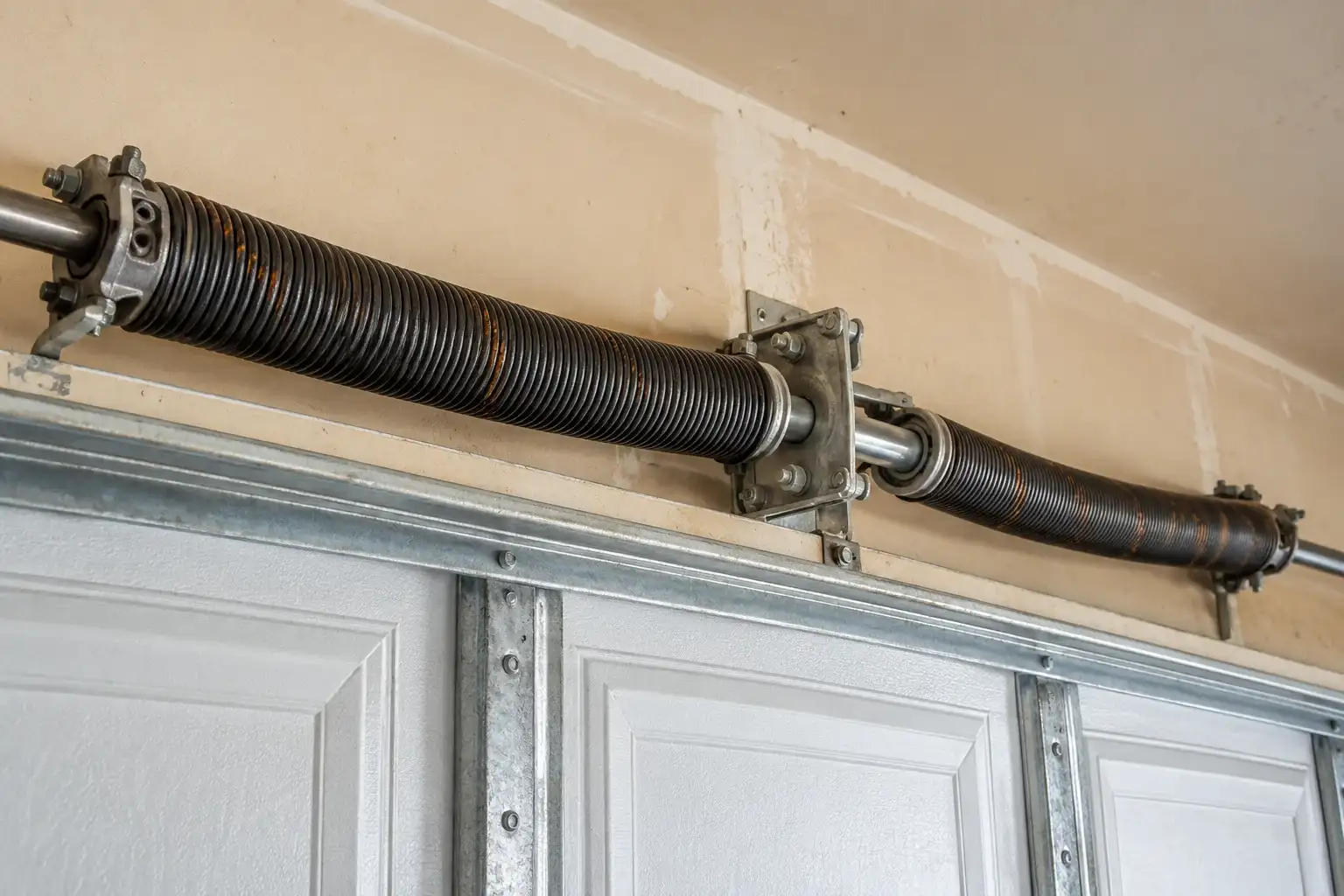
The line most policies draw is between a part that wore out and damage that arrived from outside. A torsion spring is rated 10,000 to 20,000 cycles, which HomeGuide puts at 7 to 14 years in a typical home. When it reaches the end of that rating it can break, and a break at the end of a rated life reads as wear rather than as an event.
The same goes for a cable that frayed, a roller that flat spotted, an opener motor that burned out and a bottom seal that crumbled in the sun. Those are maintenance, and they belong in the household budget the way a water heater does.
1 question worth asking your carrier before anything is filed: whether an amount is based on what the old door is worth today or on what a new one costs. Triple-I (opens in a new tab) explains that an actual cash value policy pays the replacement amount minus depreciation. On an older door the difference can be large.
6 steps
How a claim runs, step by step
Stop the door
If it is crooked, hanging, or making a new noise, leave it where it is and unplug the opener.
Photograph everything before anything gets moved.
Call your carrier and open the claim
Have the policy number, the date, and a plain description of the event.
The carrier looks at the damage
Some send an adjuster out, some ask for photos and a price, some do both.
An amount gets approved, or the carrier asks for a second look at one part of the job.
The work gets scheduled, and the bill is paid minus your deductible.
The order moves around. A carrier may want a contractor's price before an adjuster ever visits, and 2 prices that sit far apart can send a file back for review. Keep the photos, the emails and the date of every call in one folder.
Insurance
What to photograph
Shoot the door the way an adjuster reads it: whole, then close, then the parts nobody thinks about.
- The whole door, closed, from the driveway, with the house number in the frame.
- Each damaged panel straight on, then from an angle so the crease catches the light.
- The damage close enough to see the edge of the dent.
- Both tracks, top to bottom, including where they meet the jamb.
- The spring, the bar and the drums above the door.
- The opener, with the model label on the motor head readable.
- Whatever hit the door, still where it landed.
- The driveway, wide enough to show where the car sits.
Photos taken before the door is moved can carry more weight than a description written a week later. Send the set in one message rather than 12.
Arizona heat
Monsoon and dust in Glendale
The valley takes its damage in short bursts. Wind ahead of a storm, then rain driven almost sideways, then dust settling into every track and roller on the street. A door that has faced west and taken the afternoon sun for years can have brittle seals and chalky panels, and a storm can find the weak point first.
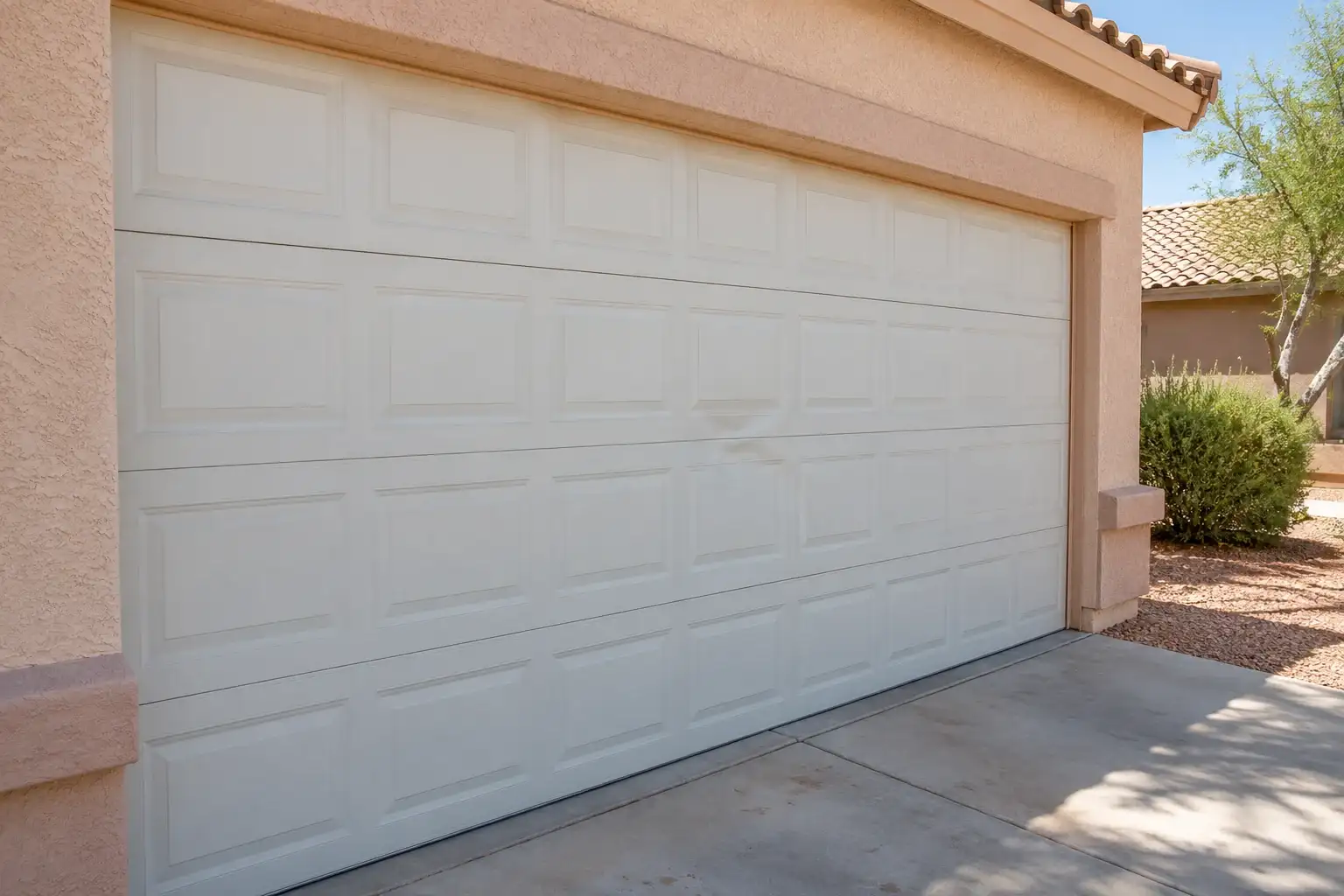
Hail leaves a mark you can point at. Wind can leave a door crooked with no mark at all, and that can be the harder claim to write up without photographs.
The north valley knows how fast this arrives. A rain observer north of Anthem reported 5.01 inches in 90 minutes on July 31, 2012 (Maricopa County Flood Control District storm report (opens in a new tab)). A storm does not need a name to damage a door. 10 minutes and 1 loose panel can be enough.
Openers
The door against the opener
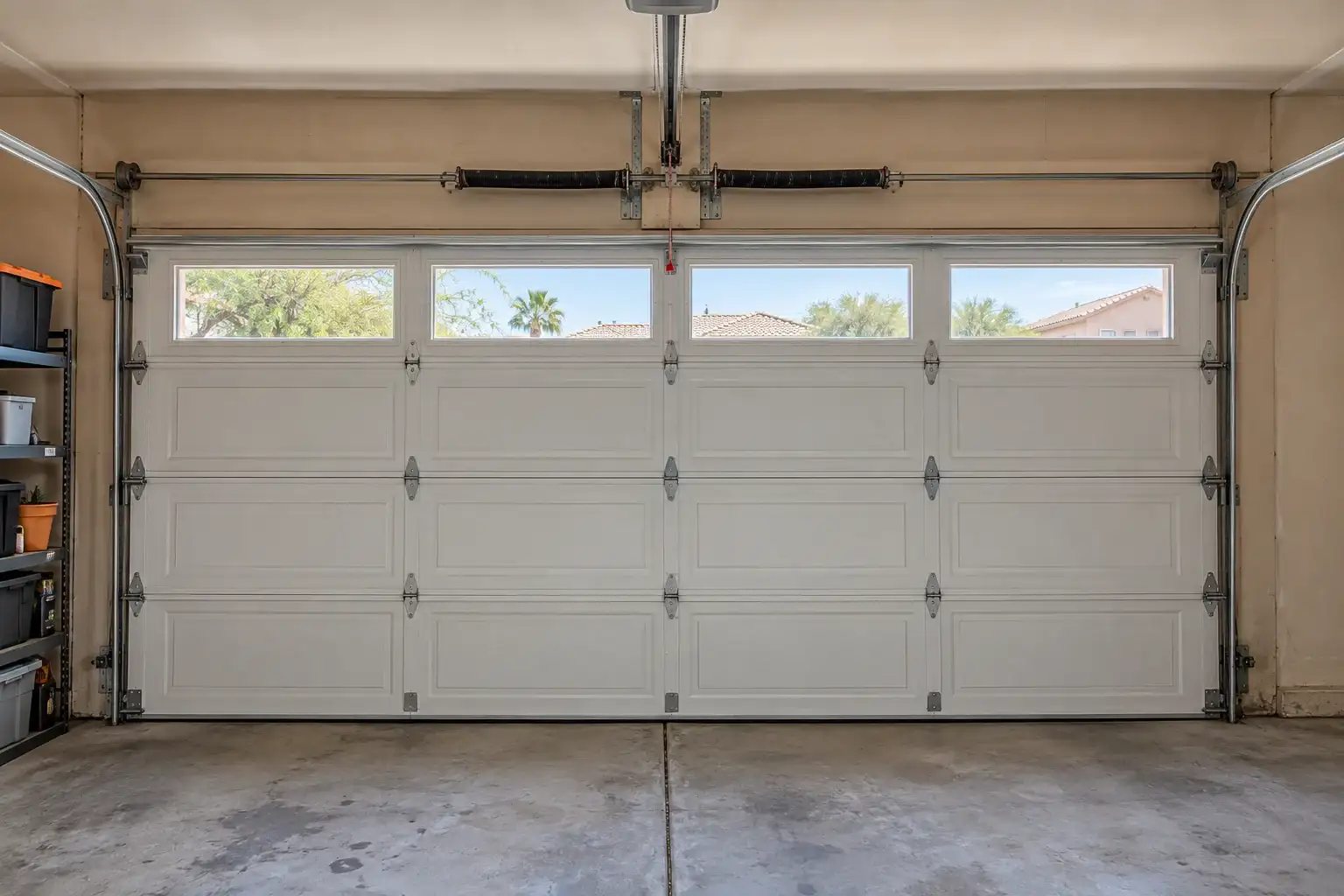
2 items, 2 decisions. The door is panels, tracks, springs and cables. The opener is a motor, a rail, a trolley and the 2 photo eyes at the bottom of the tracks.
A storm that dents a panel is a question about the door. A power surge that kills a logic board is a question about the opener, and it may sit under a different part of the policy, or under none of it. Mechanical failure of a motor is usually treated as wear, in the same way a broken spring is.
So photograph them separately and describe them separately. If the door came down on a car because the opener failed, say both things in the first call, in that order.
6 questions
What people ask us
Still have a question? Call (747) 243-2089 and say what the door is doing.
Does homeowners insurance cover a broken garage door spring?
Usually not on its own. A spring that breaks at the end of its rated life is wear. If it broke because something hit the door or a track moved in a storm, the cause is the claim, not the spring.
My door is 20 years old. Does that matter?
Age alone does not decide the claim. It can decide the amount, because an older door may be valued at what it is worth today rather than at what a new one costs.
A car hit the door. Is that homeowners or auto?
Often both policies have something to say, and which one pays can depend on the vehicle and the policy wording. Call both carriers before you agree to anything with either.
Do I need a price before I call the carrier?
Some carriers want one, some send an adjuster first. Photos and a clear description cost nothing and help under either order.
Can you talk to my adjuster?
We can describe what the door is doing and what a repair involves. The claim itself sits between you and your carrier.
Keep reading
Where to go next
- Garage door repair cost in Glendale for published ranges, each with its source and date.
- Panel repair and door replacement for a dent, a crack at a hinge, a bent bottom section.
- Door replacement for the door that is past a repair.
- The Glendale garage door guide for what fails first in Arizona heat.
- The home page for the services and the towns we cover.
Get a call back about the door. Tell us what the door is doing and someone from our team calls you back.