Guide · Glendale, Arizona
Glendale Garage Door Guide: What Fails, What It Costs
A garage door is a simple machine with 4 ways to stop working and a long list of ways to make noise first. The Glendale garage door guide below walks through what fails, why the Arizona heat changes the timetable, what each repair runs, and when the door itself is the thing that has to go. Tell us what yours is doing and someone from our team calls you back.
Signs
What breaks first on a West Valley door
The order often runs the same way. Springs first, because they are the part designed to carry load and designed to fail. Cables second, because a cable takes the shock when a spring lets go. Rollers and hinges third, because they wear quietly for years and then start talking. Openers fourth, and often as a consequence rather than a cause: an opener that has been dragging a heavy door burns out doing work the spring was supposed to do.
Panels often come last, and they tend to come from events rather than wear: a car that rolled forward, a bicycle against a section, a monsoon gust with the door half up.
Tracks and cables
A door is 4 systems working on one track
The spring system balances the door. The cable system connects the springs to the bottom of the door. The track and roller system keeps the door in line. The opener moves a balanced door up and down and does very little real lifting.
When one system fails, the other 3 take the strain. That is why a spring that snaps on Monday can leave you with a cable and a bent bottom bracket by Wednesday if the opener keeps getting pressed. It is also why a repair that fixes only the visible part can come back.
Springs
Springs carry the weight, and they are the first to go
A 2 car garage door is heavy. The springs are what make it feel light enough for a small motor, or for one hand, to move it. There are 2 kinds on a residential door in Glendale.
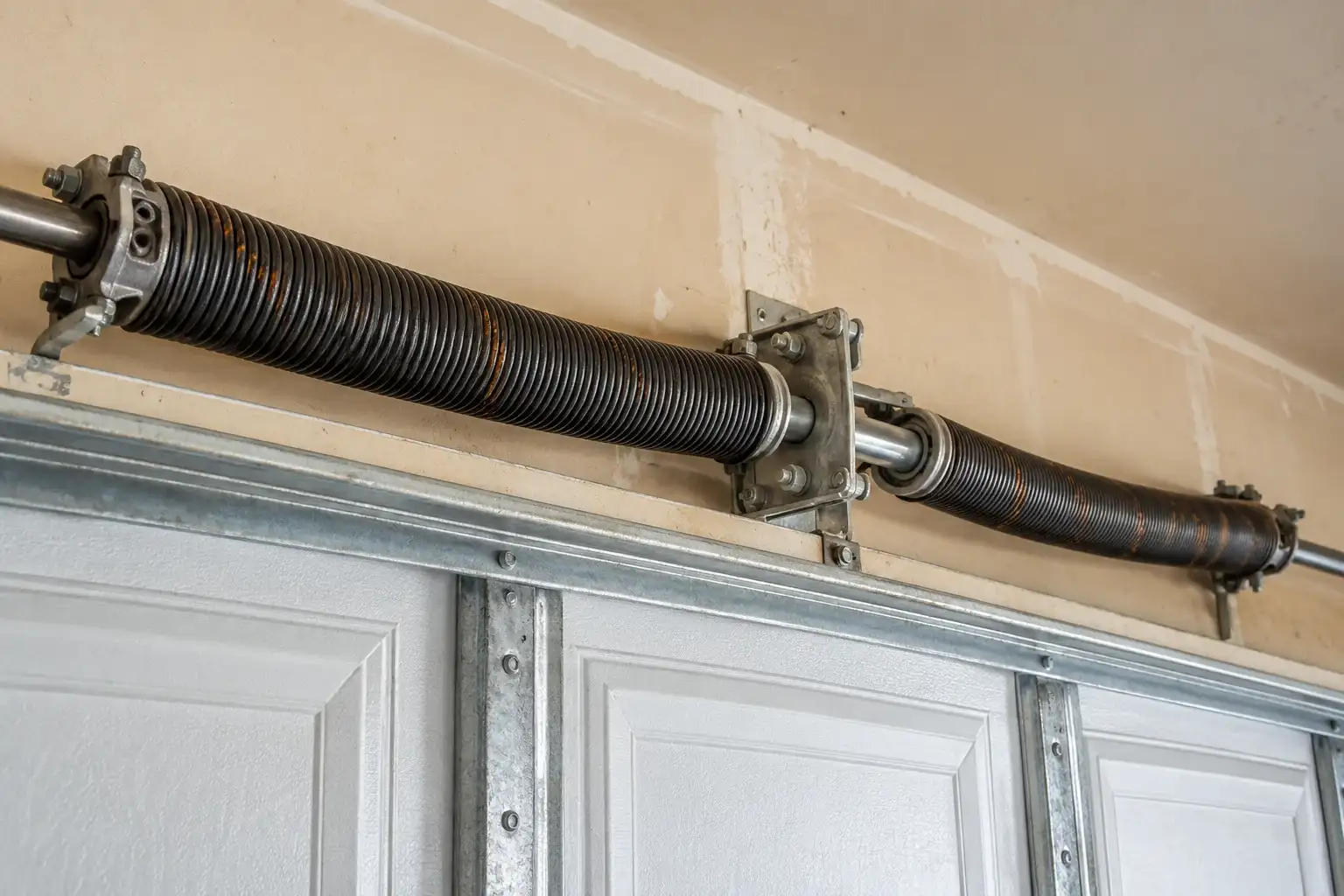
A torsion spring is a coil on a steel bar above the door head. It twists as the door closes and unwinds as the door opens, and HomeGuide lists it as the common setup on sectional doors in newer homes.
An extension spring stretches alongside the horizontal track, one per side, and HomeGuide lists extension springs as the usual setup on single panel tilt-up doors, which are common in older homes. A broken extension spring can snap with significant force and fly across the garage (HomeGuide), and a safety cable through the middle of the spring is meant to hold it.
Springs
How a torsion spring is rated, and what a cycle means
A torsion spring is rated in cycles. 1 cycle is 1 open plus 1 close. HomeGuide puts a torsion spring at 10,000 to 20,000 cycles, which is about 7 to 14 years in a typical home, and an extension spring at 5,000 to 15,000 cycles, or 4 to 10 years.
The arithmetic is worth doing once. A door opened and closed 4 times a day is 1,460 cycles a year. At 10,000 cycles, the spring is near the end at 7 years. At 20,000, it has twice as long. Nothing about the calendar changes that, and nothing about the way the door looks tells you which spring you have.
Springs
Why the heat takes the spring in June
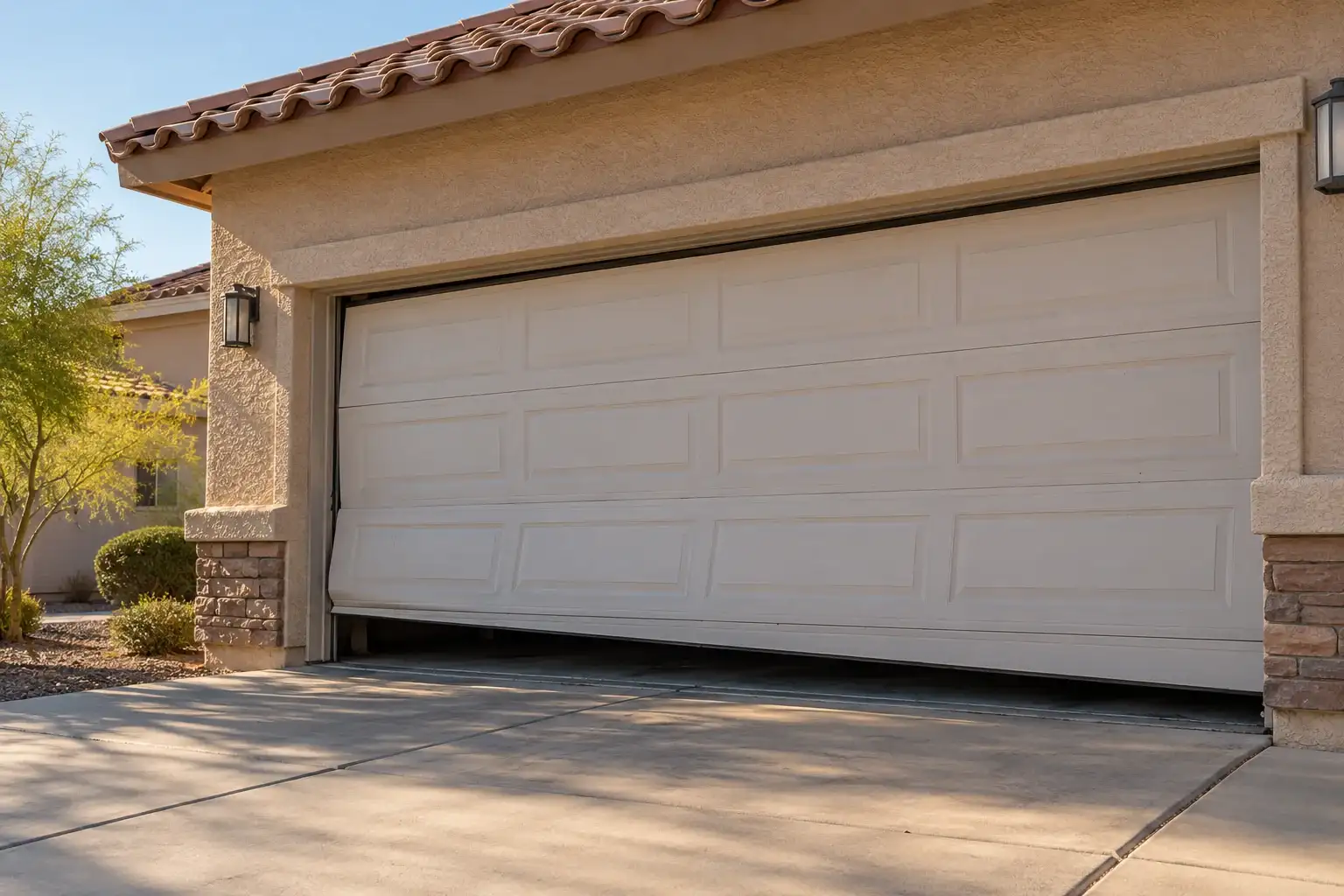
Cycles wear a spring out, not heat. Heat can add stress to a spring that is already close to its count, and it can dry out the grease in the rollers, hinges and opener gear case.
So a coil that survived a mild spring can let go once the heat arrives, and it can happen on the first press of the day. The heat can be the last straw, not the cause. The cause is the cycles the spring has already run and a wire that reached its rating.
Openers
Openers push, they do not lift
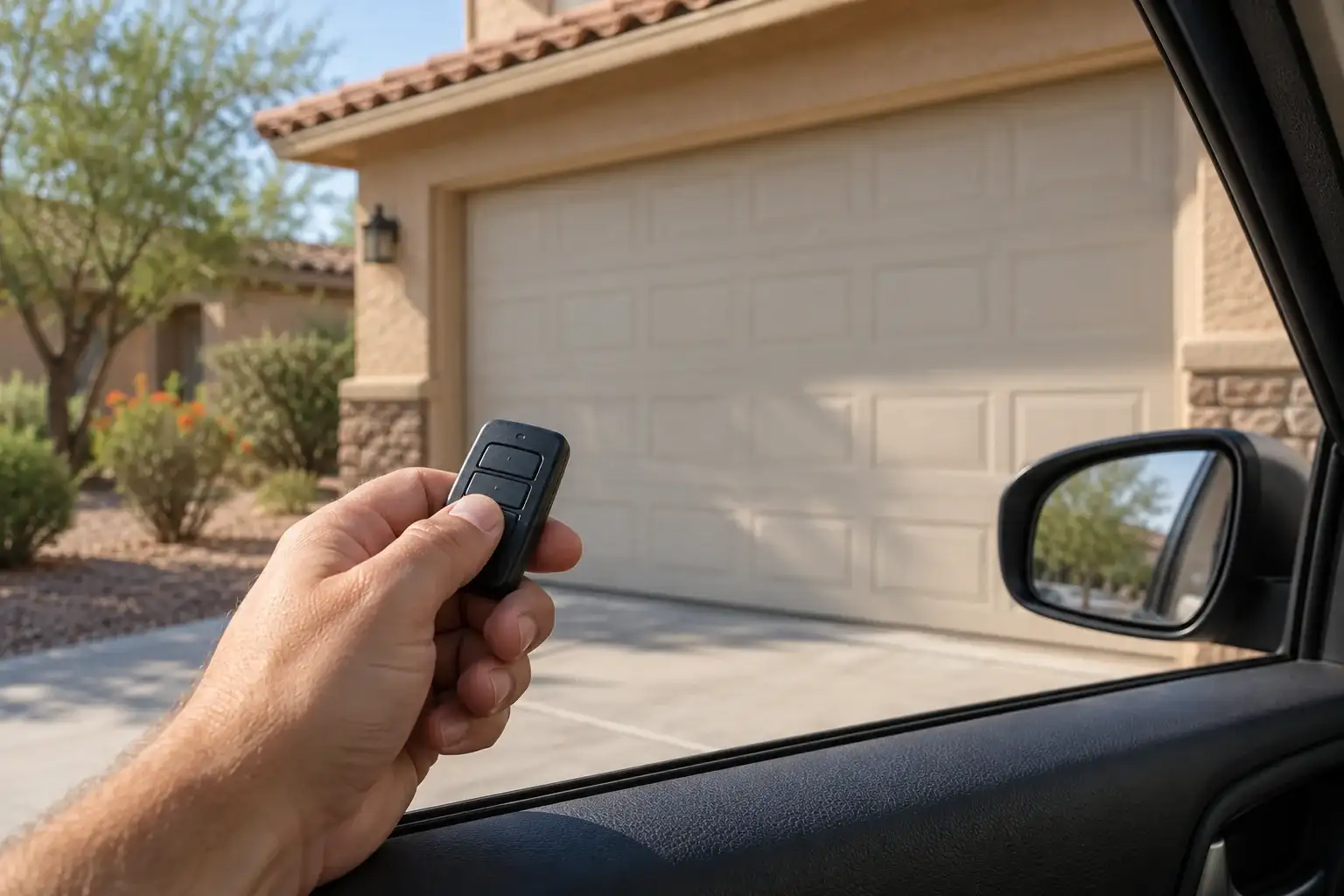
An opener is a small motor on a rail. Its job is to move a door that the springs have already balanced. When a spring is tired or broken, the opener becomes the only thing lifting the door, and it is not built for that.
The failure looks like a door that opens halfway and stops, or a motor that hums and does nothing, or a gear case that strips a tooth and starts grinding. By the time the opener is loud, the spring has often been weak for a while.
Openers
What the safety reverse does, and why it matters with children
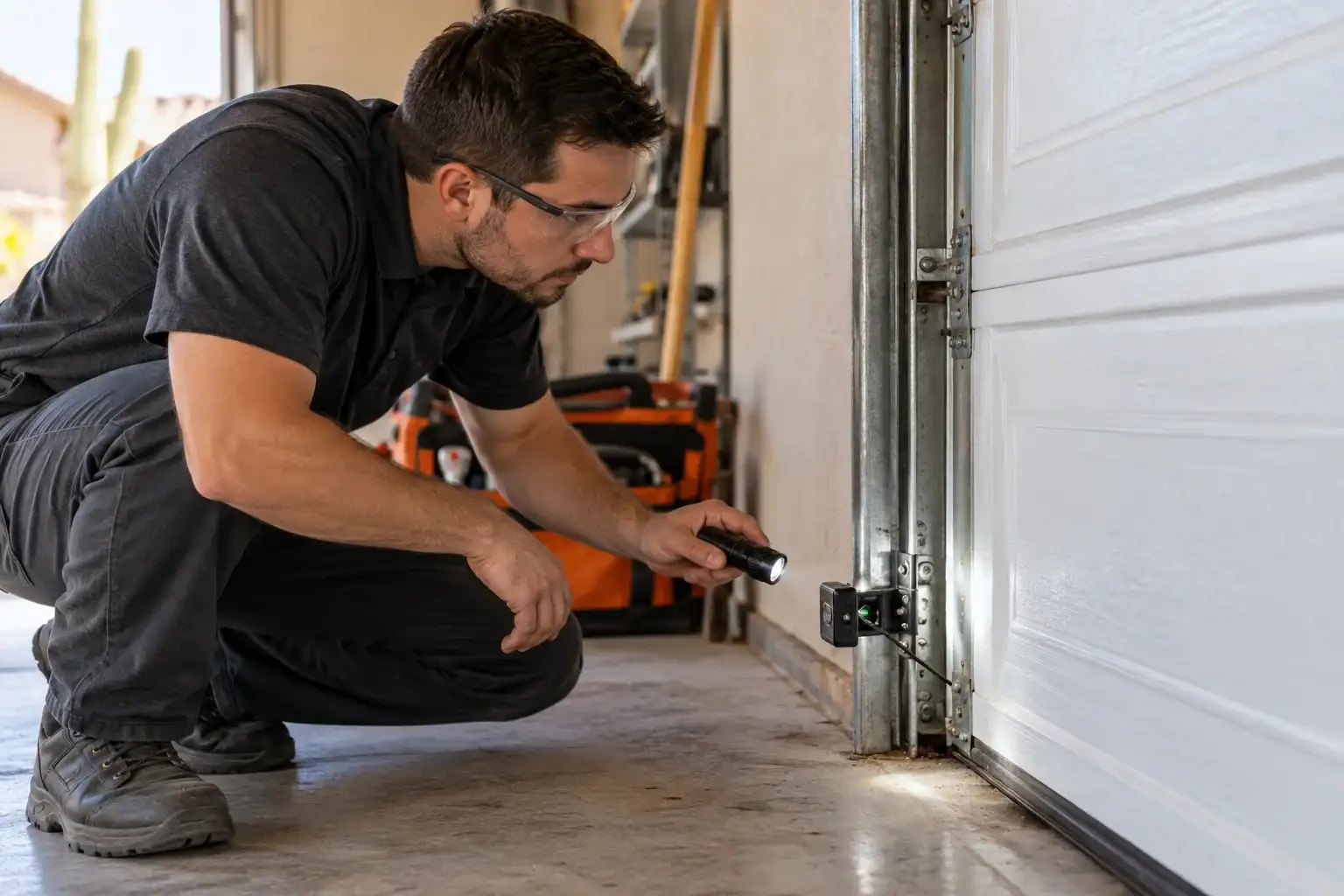
The U.S. Consumer Product Safety Commission (opens in a new tab) requires a reversing system on openers made or imported for sale in the United States after January 1, 1991, and added a requirement for external entrapment protection in 1993. That protection can be an electric eye, a door edge sensor or an equivalent device, and photo eyes at the bottom of the tracks are one common form. The eyes are a light beam across the opening. Break the beam and the door goes back up. The reverse is the setting that sends the door back up when it meets an object.
Both can be adjusted, and both can get adjusted badly by people trying to fix a door that is binding. A door that reverses on the last foot is often doing exactly what it was set to do, and the real fault is a track, a roller or a travel limit. That is a repair, not a malfunction.
Tracks and cables
Cables, drums and the bottom bracket
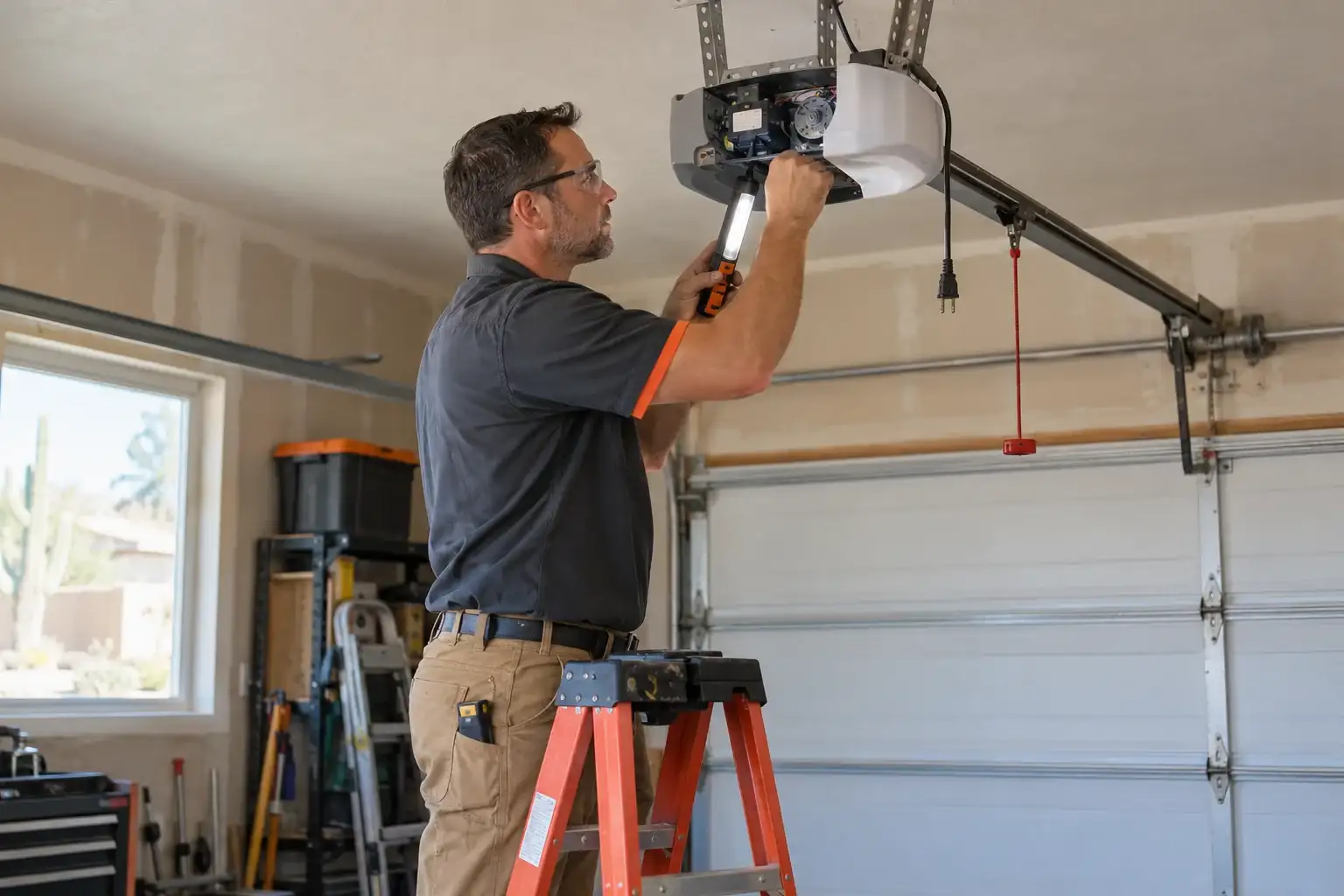
A cable runs from the bottom bracket of the door, up the side, and onto a drum at the end of the torsion bar or onto the extension spring. There is one per side, and they carry the same load in opposite directions.
A cable fails in 3 ways. It frays, usually near the bottom bracket where it bends every cycle. It jumps the drum, usually after a spring lets go and the tension disappears. Or it snaps, which is loud and leaves one side of the door hanging.
A cable that is hanging slack is the one to act on first. Slack means the tension has already gone somewhere, and a slack cable can walk off the drum and jam the door in the opening.
Tracks and cables
Tracks, rollers and hinges
The track is a steel channel, and it is more fragile than it looks. A door that gets hit, or forced, or run with a broken roller can bend the track at the curve, and a bent curve can make the door bind at the same height.
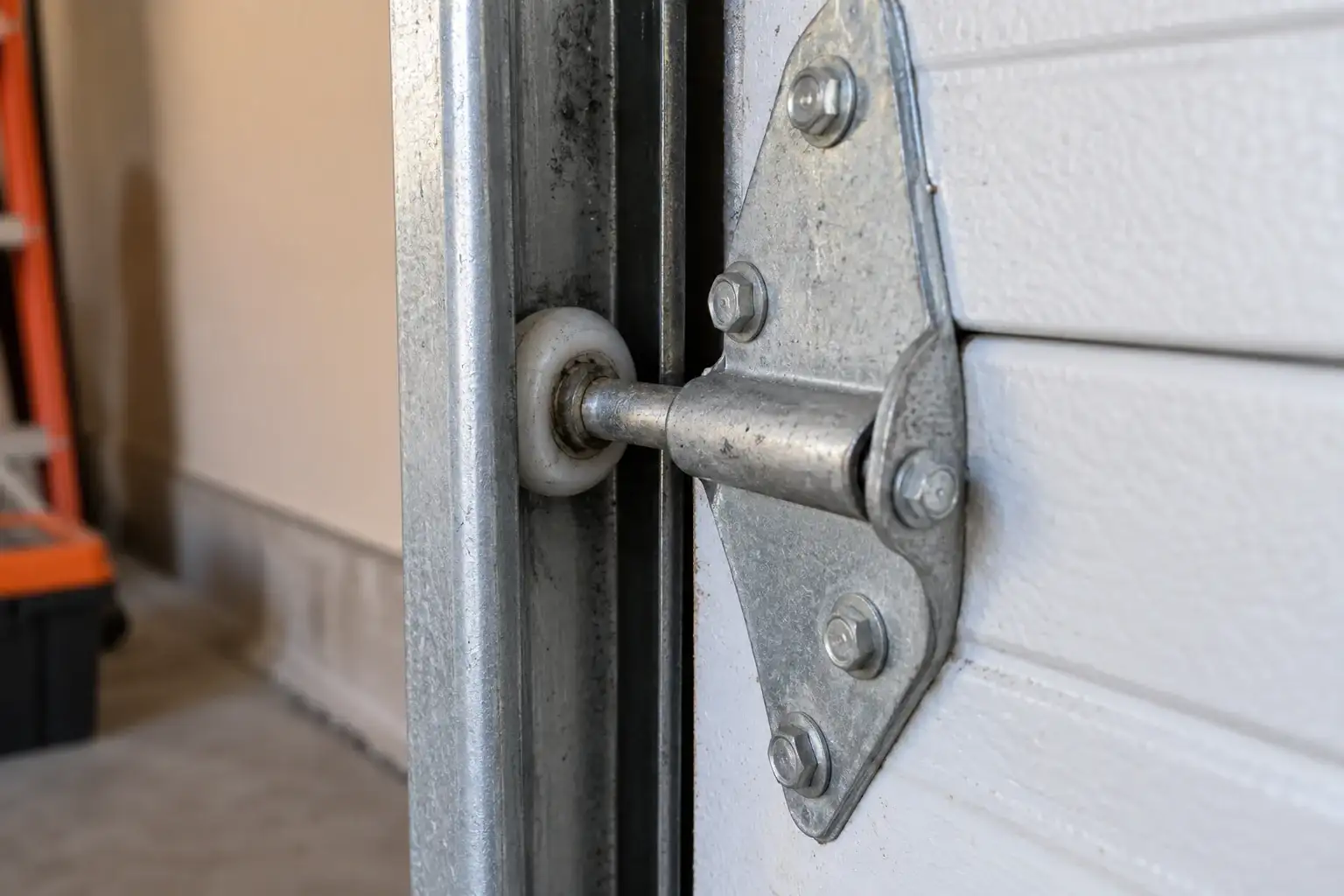
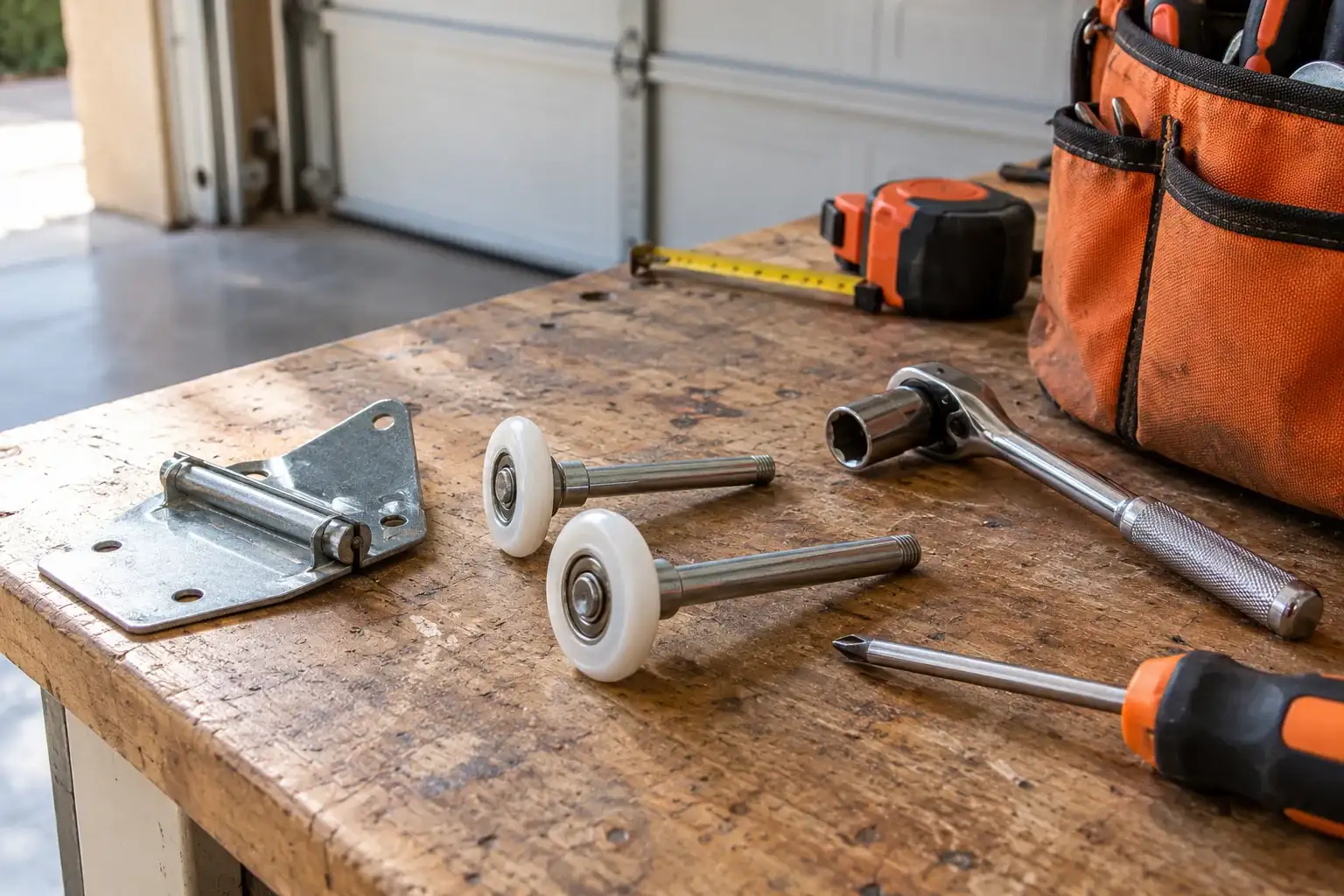
Rollers are the wheels in the track. Steel rollers can last longer and run louder. Nylon rollers can run quieter and wear faster. A roller that has lost its bearing will grind, and a roller that has left the track will drop one side of the door.
Hinges connect the panels. They carry the load between sections and they can be the first thing to tear when a door has been run crooked for a while.
Panels and doors
Panels, doors and the end of the road
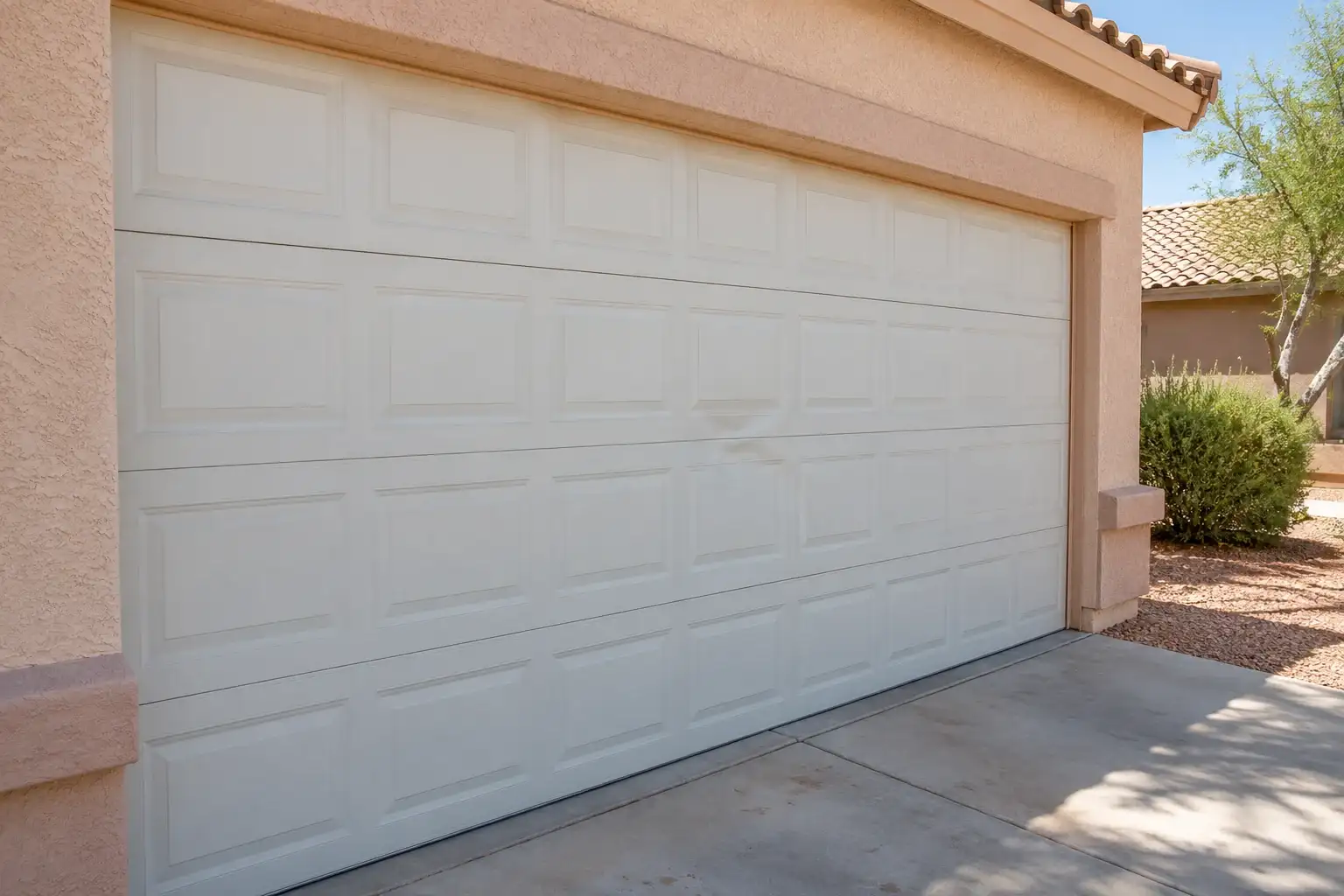
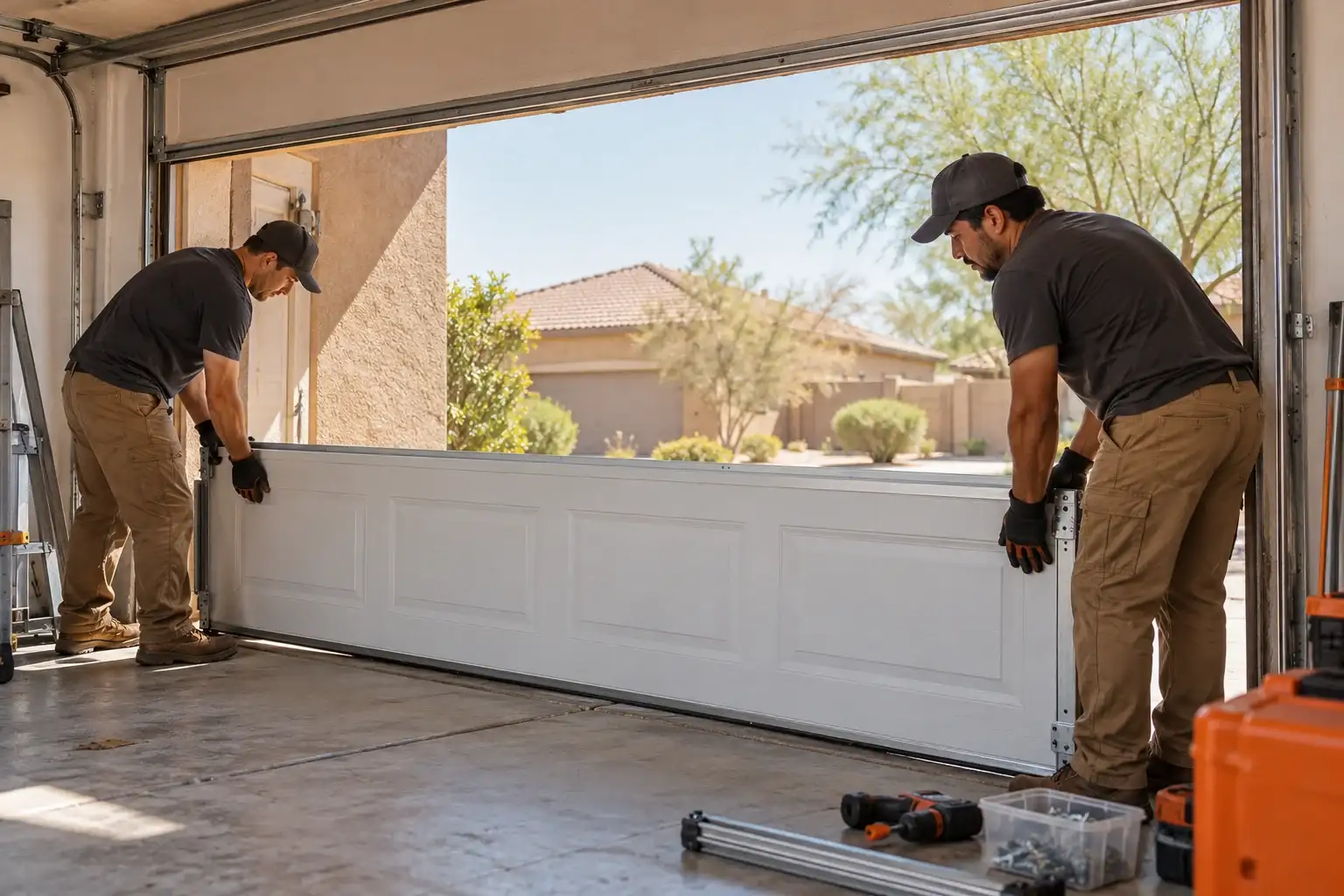
A panel is a repair when the section is available, the frame is straight and the rest of the door is sound. Panels run $300 to $900 each (HomeGuide, Oct 2026), and the price depends on the material and the profile.
A door can be the answer when the profile is discontinued and no matching panel can be found, because Angi notes that custom or hard to match panels may mean replacing the entire door. HomeGuide's rules of thumb for a new door are repair costs above 50% of the new door's price, a door over 15 to 20 years old with frequent breakdowns, or several parts failing at once. A full door replacement is $740 to $1,500 on average and up to around $3,000 at the top (Angi, 2026 data).
How it works
What each repair runs
| Job | Published range | Source |
|---|---|---|
| Garage door repair, average | $150 to $350 | HomeGuide, Oct 2026 |
| Torsion springs, both | $150 to $350 | HomeGuide, Oct 2026 |
| Extension springs, both | $120 to $200 | HomeGuide, Oct 2026 |
| Cable repair | $150 to $350 | HomeGuide, Oct 2026 |
| Opener repair | $100 to $200 | HomeGuide, Oct 2026 |
| Panel replacement | $300 to $900 per panel | HomeGuide, Oct 2026 |
| Service call fee | $50 to $75 | Angi, 2026 data |
Published ranges, read October 25, 2026. One source per row, not a quote. The full table, with every job and its source, sits on what garage door repair costs in Glendale.
Good to know
When a door is done, and when it is not
A door is done when the parts no longer exist, when the bottom section is rusted through, or when the arithmetic of 2 more repairs passes the price of a new door on a 25 year old door. A door is not done because it is old. A straight, quiet older door can be worth another spring.
The test is simple. Is the frame square, is the door balanced when you disconnect the opener, and is a matching panel still made? 2 or 3 yes answers and the door can stay. 1 yes and it depends. No yes answers and a new door can be the cheaper road.
Arizona heat
Monsoon season and the door
A dust storm, a microburst or a hailstorm can reach the door before it reaches anything else in the house. On July 31, 2012 a rain observer north of Anthem reported 5.01 inches of rain in 90 minutes, about 23 miles north of Glendale (Maricopa County Flood Control District storm report), which is the kind of storm that can find a gap in a weather seal or a panel that is not fully closed.
Wind can get under a door that is open a few inches and bend a section. Hail can dent steel. Rain driven sideways can get past a seal that has gone hard in the sun, and the first sign can be water on the garage floor after a storm.
Good to know
Renting a house with a broken door
A tenant can describe a symptom as well as an owner can, and the call back works the same way. The one thing that changes is approval: whoever pays for the repair approves the number. Say up front whether that is you or the owner, and the conversation happens once instead of twice.
If the owner wants the figure before anything is committed, say that on the first call. It saves a second call later, and it keeps the door from sitting broken for a week while everyone waits for someone else.
Rules
HOA rules and a door that has to match
An HOA can require a door that matches the street, and some do. A color, a panel style or a window pattern can be written into the design guidelines for a community, and a door that ignores them can generate a letter from the association.
The time to find that out is before the door is ordered. If the garage is on a street with an association, say so when you call, and the door gets chosen from what the association allows rather than from a catalog page.
Insurance
Insurance and the door
A door damaged by wind, hail, a falling object, fire or a vehicle can be a claim. A door that failed because a spring reached the end of its cycle is usually not, because Triple-I says a standard policy will not pay for routine wear and tear (opens in a new tab).
Photograph the damage before anything is moved, and keep the photos with the claim number. The full explanation, including what a policy typically excludes, sits on does homeowners insurance cover a garage door in Glendale.
Upkeep
A maintenance calendar for Glendale
Once a month. Look at the door when it is down. A gap at the top, a cable hanging loose, a roller out of the track. CPSC advises checking the door and the opener every 30 days, including the reverse: lay a 2x4 flat on the floor in the path of the door and close it, and the door should reverse when it touches the 2x4.
Twice a year. Wipe the sensor lenses. Listen at the same height every time for a grind.
Once a year, before June. A tune up at $100 to $250 (HomeGuide, Oct 2026), which HomeGuide says most often includes inspection, adjustment, lubrication, safety checks and minor repairs. This is the appointment that can catch the next failure before a 110 F afternoon does.
After any storm. Look at the panels, the seal and the floor. Water inside the garage after a storm is often a seal, not a mystery.
10 questions
What people ask us
Still have a question? Call (747) 243-2089 and say what the door is doing.
How long does a spring last in Glendale?
Most springs last 10,000 to 20,000 cycles, about 7 to 14 years for most homes (HomeGuide, Oct 2026). A door opened and closed 4 times a day uses about 1,460 cycles a year. Heat can add stress near the end, it does not reset the count.
Can I replace a spring myself?
HomeGuide calls spring replacement extremely dangerous because of the high tension in the springs, and warns that a DIY attempt can cause serious injury or death. Extension springs carry risk too: a broken one can snap with significant force and fly across the garage.
Why did the door come off the track with no warning?
A door often gives a warning first. A roller with a worn bearing, a track bent weeks earlier or a door that has been running crooked will all show a sign first: a scrape, a pause, one side sitting lower. The final event is the sign being ignored.
Is it cheaper to repair a door or replace it?
In most cases repairing is cheaper than replacing (Angi, 2026 data). Replacement starts to make sense when repair costs pass half the price of a new door, or when a door over 15 to 20 years old keeps breaking down (HomeGuide). Below that, the door usually stays.
Does a new opener fix a heavy door?
Not by itself. A new opener moves a balanced door and strains on an unbalanced one. If the door is heavy by hand, the springs are the likely repair, and a new opener on tired springs can be money spent twice.
What is a safety reverse test?
CPSC's test is to lay a 2x4 flat on the floor in the path of the door and close it. The door should reverse when it touches the 2x4. If it does not, CPSC says to disengage the opener until it is adjusted according to the owner's manual, repaired or replaced.
Can a dented panel be repaired instead of replaced?
A minor dent can sometimes be worked out, and dent repair runs $100 to $300 for a minor dent and $250 to $400 when the paint has cracked (HomeGuide, Oct 2026). HomeGuide notes that severe denting may require a full panel replacement.
Is a garage door repair covered by insurance?
Usually only when the cause is an event: wind, hail, impact, fire. Routine wear, including a spring that simply reached its rating, is maintenance rather than a claim (Triple-I).
How long does a repair take?
A spring or a cable is often a single visit. A panel depends on the profile being available. A door replacement is a scheduled job, because the door is ordered to the opening.
Do I need to empty the garage?
Not all of it. Angi advises clearing the area around the door and the opener, and moving vehicles, tools and stored items near the door that could get in the way. The rest of the garage can stay as it is.
Keep reading